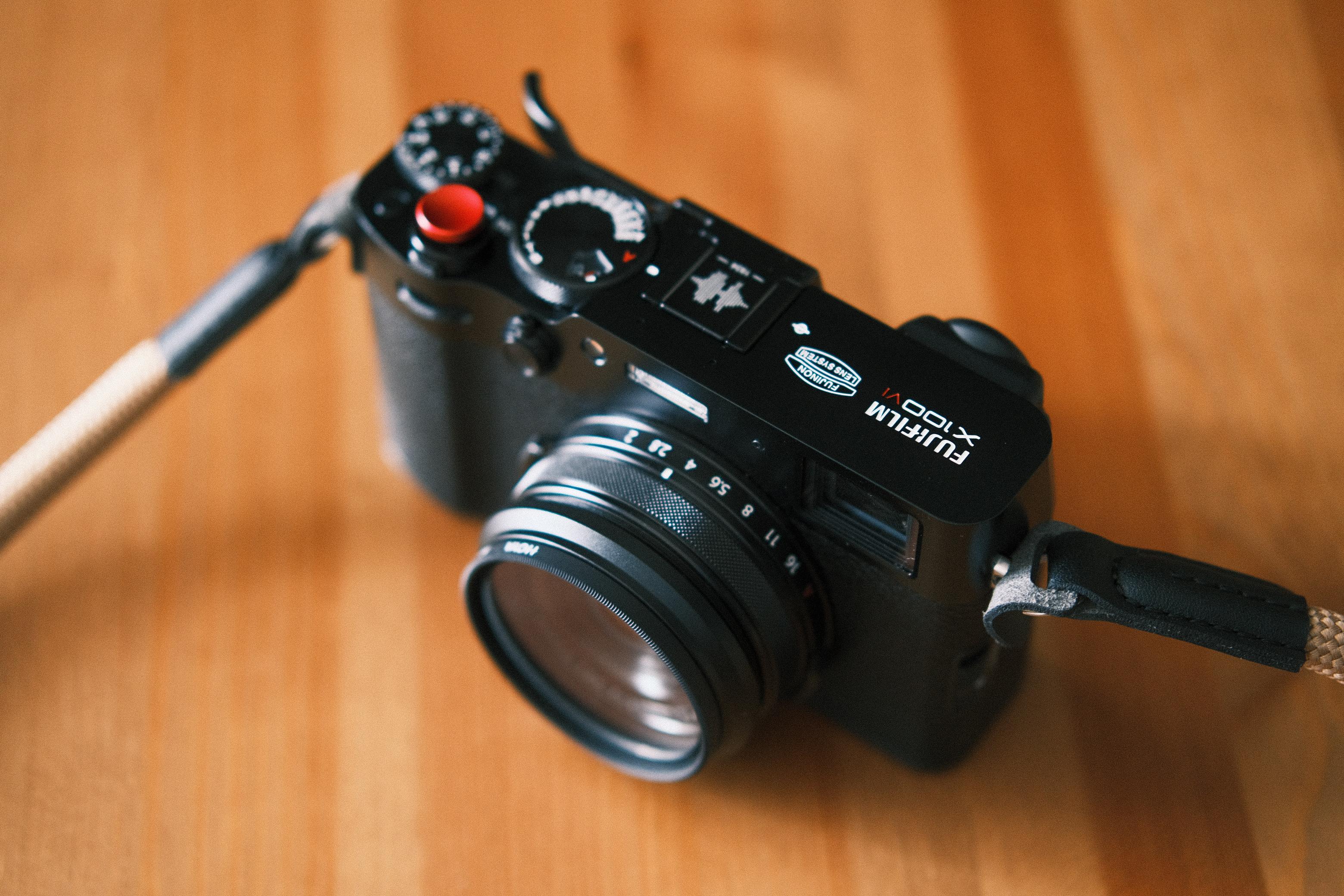
A first impressions review.
In 2022, the Fujifilm X100V exploded on social media and became almost impossible to buy. This timing was extraordinarily unfortunate for me, as I was about to buy one at that time. I am largely absent from social media, so the TikTok buzz was not a motivator for me (which I am proud of). But I watched Fujifilm’s press event when they released the camera, and it was on my list after I saved some money. Sadly, when the funds became available, the camera was not.
Fast forward four years, and I found myself in Tokyo, Japan during the summer of 2025. A quick Reddit search revealed a shop that MIGHT have some in stock just a one-hour train ride from my hotel. On the off chance I might actually be able to buy one at retail pricing… off I went. I didn’t call first because my Japanese is painful and my loathing of phone calls even more so.
Fujiya Camera in Nakano was my destination, and upon my arrival—don’t you know—they had not only multiple used X100V cameras, but also the new X100VI cameras below retail pricing.
I almost threw my credit card at the nice Japanese gentleman.
But $1,450 USD is no small sum. Was it worth it?
Short version: Good camera. But at this price, it is impractical for anyone who isn’t a professional or avid enthusiast.

All images except for this first one in Japan were taken with the x100vi.
Traveling With The X100VI
This was partially a purchase for a trip to Italy I was going on with my girlfriend a few months later. I hemmed and hawed over what camera and lens to bring to the land of wine and cappuccino. It wasn’t a photo trip, so I didn’t want to burden myself with lots of gear. The XT4 is just a little heavy for all-day carry; I was a little bored with it at that moment anyway. So, the X100 was the perfect selection, and if you’re not doing a photography-focused trip, it truly is a fantastic travel companion.
Slinging the X100VI over your shoulder for a day of sight-seeing is a breeze. Most of the time, I didn’t even notice I had it with me as it floated on the strap at my back or hip. And the amount of photographic quality and technology packed into a camera that small and inconspicuous is truly a tremendous way to travel. I have taken more than one camera to more than one corner of the world, and I have to say this was my favorite way to capture a city. It is perfect in an urban environment. However, it is not without its limitations. I will get to that.

Classic Fujifilm + Build Quality
Honestly, there is not much to comment on regarding the physical camera itself. All classic Fuji X. The dials feel nice. The physical controls are a delight. The lens is nothing I would write home about, but it’s no slouch—just a good performer. The colors look like all the other Fuji colors. Everything is as you would expect, except for the very flimsy-feeling doors, covers, and seals.
This is a disturbing trend I have noticed with their cameras over the last three or so years, and one that deeply concerns me. In truth, the camera feels of decent quality in the hands. But I have had a repair issue with my XH2 and am seeing more and more people on YouTube and forums complaining of a significant drop in quality. For what this camera costs, there is really no good excuse, in my opinion. However, the parts that you actually interact with frequently are metal, feel solid, and are confidence-inspiring. I even bashed the thing against my girlfriend’s camera when I picked her up to put her on a wall. However, there was no damage. So… perhaps it is quite sturdy and my concerns are unwarranted.
It Really Is a Special Camera - Optical Viewfinder - ND filter
And now to the best two parts of the X100 cameras: the optical viewfinder and the built-in ND filter.
Why this is, to my knowledge, the ONLY mass-produced camera with a dual optical/evf viewfinder is beyond my comprehension. It’s just the best way to shoot. I would put this feature in every camera I own if I could. I can’t tell you how many reviewers passed over this aspect in their reviews, noting that it was interesting but not worth using. What on Earth?
First, the EVF kinda sucks. Feels very low-res compared to my XT4 and XH2. It works, but not something I would seek out.
The optical viewfinder puts you back in the moment and place you are. The refresh rate is infinite, because it’s just reality. The view is wider than your capture, so you can see what is outside your frame. It’s crisp. It’s clear. It has just enough information displayed, but not too much.
And, while there were certainly times that I switched to the EVF just to be sure I was getting the right exposure, I would say 60% of my shooting was with the optical viewfinder. It took me right back to my happy DSLR days. When moving quickly to capture important shots, it might not be the best, but for a slow photo walk that benefits from immersion, the optical viewfinder is a dream.

And the second-best part of the camera? The built-in neutral density filter.
I hate filters. And I hate tripods. I just hate hassles, and that’s exactly what filters and tripods create. But with one flip of a switch, I can apply the ND filter and shoot wide open in daylight without sending my shutter speed to the moon. This has tremendous advantages for video, but I used it for photos on occasion too. It’s the kind of thing you probably already know you will appreciate if you indeed… will appreciate it. Otherwise, you can safely ignore this feature.
Other Notable Features
I won’t dwell on the sensor or megapixels for long because, honestly, it’s the absolute least important part of any modern camera. The 40MP is great—not mind-blowing, but good. It resolves a lot of detail in good light. Handy for cropping, but not that much more detailed than the 24MP sensor. The IBIS is a great feature and nice to have in any camera. I appreciate it for video and also for low-light shooting. The images overall look fantastic, and the reason I haven’t spent much time talking about it is that they look exactly like any other Fuji camera with this sensor and processor combo. It’s thoroughly modern with great colors and great rendition. If you like Fuji files, you will like these.

Downsides
It’s not a perfect camera. I mentioned already that the doors covering the battery and audio jacks feel like they belong on a toy.
It comes with a fixed 23mm lens which, while very practical, is too wide for my taste.
And the menus are just, well, Fujifilm menus. So, not amazing. I am used to it now, having owned the cameras for six years. But I think Nikon and Canon shine in this department. Fujifilm really needs to just start over from a UI perspective. I get that it’s a challenge given the inputs and volume of information that has to be displayed. But, yeah, not great.
Also, changing from photo to video mode requires you to go into the drive menu and then scroll through the menu to change it. This is an absurd workflow on any camera in this day and age. If you insist on setting it up that way, please at least allow me to assign a toggle for photo/video to a custom button somewhere. You made a tiny travel camera with an ND filter and 6K, 10-bit recording and then made it a pain to switch to video. I could understand this decision as a first attempt. But the X-E3 was like this too, from years ago. It’s not a good UX choice.

And lastly, the price.
$1,500 is not an outrageous price to ask for what you are getting. It is a one-of-a-kind camera. It is also, however, a lot of money… especailly for a camera that is essentially an enthusiast camera. That amount of money will buy you not only a lot of cameras from other brands like Lumix or Sony, but $1500 will also buy great new and used cameras from Fujifilm that allow for lens changing, various controls, and designs that might suit you better, etc.
Conclusion
The Fujifilm X100VI, while imperfect, is one of my favorite cameras of all time. I hope it serves me for many years to come, and I am sure it will be a faithful coffee shop and casual travel companion for hundreds of trips and outings in the future.
The real question, if you don’t own one, is whether or not the price is justified. If $1500 is a lot of money to you (it is to me) and you are a casual photographer, I would pass.
If you can afford it and photography is an obsession, go for it.

The Fujifilm 27mm f2.8 WR is by far my most used Fujifilm lens. It has lived on my camera for months at a time, traveling across dozens of time zones and almost as many country borders. However, while it is my most used lens, I can’t say it’s my favorite. It is, in fact, a lens of compromise. “In what way?” I can hear you ask. Read on, I shall explain.
Focal Length
Let me begin by touching on one of my most liked and disliked aspects of this lens: the focal length.
On the Fuji X cameras, a 27mm focal length gives a full frame field of view of roughly 40mm. It is a tremendously useful lens in that regard, as any 40mm is. Wide enough to capture street scenes with context and close enough for a portrait or food photograph. I can walk around with this lens all day and know that by simply moving my body around, a wide variety of photographic types will be available to me in any location. It is also a near “normal” field of view, so pressing the camera to your eye shows a scene not dissimilar from what you might have been looking at before, unaided by your lens.

But, therein also lies the problem. It is a field of view that says very little—artistically. I can’t tell you the number of times I saw a photograph in front of me, only to put the camera with this lens to my face and discover the field of view was far too wide. I couldn’t isolate what I was seeing at all. The same has often been true in reverse: faced with a dramatic scene or sweeping landscape that took my breath away, I struggled to capture it and include all the details I wanted.
So, in many ways, the 27mm is a lens of photographic compromise and oftentimes a bit dull feeling.

Size and Weight
This is where the 27mm shines and why it has spent so much time on my camera. This little pancake lens isn’t all that much bigger than my camera body lens cap. Placing it on the camera adds almost no weight, making any Fuji X camera a breeze to carry around all day. In addition, it is unassuming. No one notices or cares that you even exist because you do not look like an official photographer with this little kit.
As the saying goes, the best camera is the one you have with you. Well, I suppose that applies to lenses as well. If I’m honest, the size and lightness of this lens have meant that I take my camera out more and use it more. And so, I get more photographs. And that is the kind of benefit that shouldn’t be understated when it comes to any piece of photographic gear.
Image Quality
As far as sharpness, rendering, colors, etc… I wouldn’t say there is much to remark on. The 27mm is neither incredible nor a failure. It is simply a good lens. Sharp enough to render detail, especially stopped down to f4 and after. Good colors and contrast for my taste anyway. The only real complaint I have is that it does feel a little bit soft at 2.8, and I do like to shoot my lenses wide-open a lot. Additionally, this seems particularly noticeable when it comes to subjects that are closely focused.

Oh, on that note, you can’t actually get that close to objects with this lens. The minimum focus distance is a little over 1 foot (13 inches/33cm). And at that distance, it is not the sharpest result. So, I have sometimes found myself disappointed in having to back away from subjects.
Conclusion
In spite of its shortcomings, I feel this is a lens that no Fujifilm X shooter should be without in their arsenal. It’s simply too small, too useful, and too good not to take with you and use on a regular basis, assuming the focal length is one that pleases you. I have shot everything with it. Cities, nights, people, mountains, you name it. And, while imperfect, it has delivered fantastic photographs for me again and again.

I’ve owned and used the Fujifilm X-T4 for almost four years now. And, while it certainly isn’t the perfect camera, I think it is as relevant today as it was when it was released in 2020.
For this review, please do not expect a laundry list of technical specifications. You can find that in hundreds of other places. I will be focusing on what it has been like to use and own this camera over the last few years, as well as addressing whether or not you should consider purchasing one.
All images in this article were taken with the X-T4 and edited by me in either Lightroom or Capture One.

Image Quality
The big dark secret that almost no one seems to mention when it comes to image quality with digital cameras is this: virtually any professional or prosumer digital camera made in the last 7 years is going to provide you with extremely high-quality images. I have a large, 24-inch print on my wall from a 12-megapixel Panasonic camera I bought 8 years ago, and it looks fantastic. So, if you are concerned about the 26-megapixel sensor in the X-T4 not being sufficient for you, please don’t stress about it. I take photos with it and commonly crop them down by 30% to 40% while still walking away with high-resolution (or high enough) images.
What matters much more are color and dynamic range. Both of which, I am happy to say, are more than adequate with the X-T4. Of course, the camera includes Fujifilm’s fantastic colors.
And, while I love the Fuji colors, I can’t say I like them that much more than Canon or Nikon files. I think this aspect of Fuji’s cameras might be a touch overhyped. But, don’t get me wrong. The colors are great, and having Fuji’s custom color profiles available for post-processing in my edits is extremely handy and saves a lot of time. This is especially true for editing portraits where appealing skin tones are important. Being able to start my edit with the Astia profile and then work from there just saves me a lot of effort.
Beyond that, I would say that in general, the X-T4 was a significant step up from the Fujifilm X-T2 I was shooting with before. I can’t tell you exactly why, but I distinctly remember opening the first files I shot with the X-T4 and having that ‘wow’ moment. The files were truly impressive. Not that the X-T2 was bad by any means, great camera. But the X-T4 took things to another level.
Build and Ergonomics
My next opinion will probably be a bit controversial. I don’t expect many people to agree with me.

First, I find all of Fuji cameras to be a bit lackluster when it comes to build quality. Sure, they feel ok in the hand and I’ve never had one break down on me. But, for me, they lack a certain robustness and premium feel that I enjoyed with my Nikon cameras. It’s an unfair comparison in a way, because Nikon is probably best-in-class in the build/feel department. I’ve never owned a Leica. But, there it is.
The Fuji X series cameras are well made. But command dials feel plastic-like and unsatisfying to click. The buttons everywhere on the camera are just… fine. And, while I commend them for the quality and feel of the top dials (shutter, exposure comp, iso), everything else just kind of lets the camera down a bit. Now, I much prefer Fuji’s cameras over the Panasonic cameras I have owned in terms of look and feel. But, I still can’t give Fujifilm 5 out of 5 stars here.
The ergonomics of the X-T4 feel decent. The grip is larger than some of the other X cameras and I am a happy flip screen user. Of course, the top dials are lovely to use and make operating the camera enjoyable. They also allow you to see all of your settings while the camera is off. So, I can shoot with this camera all day and then some, leaving it off most of the time and still being able to see my settings or update them.
It’s not as comfortable as literally any other camera with a deeper grip, but for its form factor, I feel it is a reasonable compromise.
Autofocus
Nothing to write home about here in the autofocus department. With single point AF-S (which is what I shoot in 90% of the time) everything is good. Focus the camera, re-frame the shot, take the shot. Works great. Very fast and very reliable.

Face tracking and eye tracking? Well… it depends.
Putting the camera into AF-C (continuous) mode and enabling face and eye detection yield mixed results.
In low light, it can be particularly untrustworthy. In good light, I will often get a 70% or more keeper rate. It’s something I use, but not something I depend on, if that makes sense.
One thing I will say is that changing the AF-C Custom Settings to number 2 (Ignore Obstacles) helps a bit. The biggest game changer was when someone on the internet recommended I change the Release/Focus Priority setting from ‘Release’ (the default) to ‘Focus’. This turned the X-T4 into a completely different camera when it came to autofocus tracking. So, I do recommend that.

Anyway, all that to say if you’re taking portraits for fun or of friends and you want to use the autofocus tracking, it works decent. If you’re depending on it for professional wedding work or something… yeah, I’m not so sure. People do it. And, I’m not a wedding photographer. But, I’m not sure I’d depend on it.
Should You Buy It?
And now for the big question. The question you are probably here to answer. Should you buy one?

Honestly, yes. I’ve been very happy with my Fujifilm X-T4 and it has served me reliably. Delivering high quality images with no complaints.
I shoot landscapes, urban environments, night photos and travel photography. And for me, it has been a fantastic companion. It’s small enough to enjoy carrying around and ‘professional’ enough to justify using it over my cell phone. What has kept me with Fujifilm for the last 6 years is the versatility of their APS-C X system. It’s not the biggest sensor, but the lenses are pretty small. It’s not the cheapest system but it’s also not eye-watering expensive. It’s not the best image quality you can get, but it’s very good. It’s not the lightest camera, but it’s far from heavy. You can’t get the shallow depth of field, but you can get a shallower depth of field than on a micro-four-thirds camera.
For me, Fuji just checks most of the boxes. It’s an easy camera to take around the world and for the most part, it stays out of my way and lets me take the photos I enjoy. Which, after all, is what it’s all about.